
Protease Inhibitors and Phosphatase Inhibitors

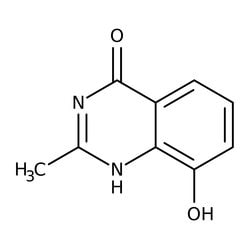
MilliporeSigma™ Calbiochem™ PARP Inhibitor VI, NU1025
The PARP Inhibitor VI, NU1025, also referenced under CAS 90417-38-2, controls the biological activity of PARP. This small molecule/inhibitor is primarily used for Cell Structure applications.

MilliporeSigma™ Calbiochem™ PKD Inhibitor, CID755673
The PKD Inhibitor, CID755673, also referenced under CAS 521937-07-5, controls the biological activity of PKD. This small molecule/inhibitor is primarily used for Phosphorylation & Dephosphorylation applications.
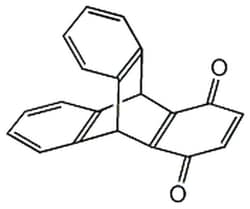
MilliporeSigma™ Calbiochem™ NFAT Activation Inhibitor III
The NFAT Activation Inhibitor III, also referenced under CAS 3519-82-2, controls the biological activity of NFAT. This small molecule/inhibitor is primarily used for Inflammation/Immunology applications.

MilliporeSigma™ Calbiochem™ TRPML Agonist, ML-SA1
The TRPML Agonist, ML-SA1 controls the biological activity of TRPML. This small molecule/inhibitor is primarily used for Biochemicals applications.

MilliporeSigma™ Calbiochem™ JNK Inhibitor III, Cell-Permeable
The JNK Inhibitor III, Cell-Permeable controls the biological activity of JNK. This small molecule/inhibitor is primarily used for Phosphorylation & Dephosphorylation applications.

MilliporeSigma™ Calbiochem™ InSolution™ (+)-Brefeldin A, Eupenicillium brefeldianum
A 25 mM solution of (+)-Brefeldin A in DMSO.

MilliporeSigma™ Calbiochem™ Focal Adhesion Kinase Inhibitor I
The Focal Adhesion Kinase Inhibitor I, also referenced under CAS 4506-66-5, controls the biological activity of Foca Adhesion Kinase. This small molecule/inhibitor is primarily used for Phosphorylation and Dephosphorylation applications.
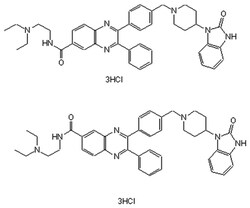
MilliporeSigma™ Calbiochem™ Akt Inhibitor XIII, Isozyme-Selective, Akti2-1/2
The Akt Inhibitor XIII, Isozyme-Selective, Akti2-1/2 controls the biological activity of Akt. This small molecule/inhibitor is primarily used for Phosphorylation & Dephosphorylation applications.

MilliporeSigma™ Calbiochem™ Myeloperoxidase Inhibitor-I
The Myeloperoxidase Inhibitor-I, also referenced under CAS 5351-17-7, controls the biological activity of Myeloperoxidase. This small molecule/inhibitor is primarily used for Inflammation/Immunology applications.
MilliporeSigma™ Calbiochem™ Histone Acetyltransferase Inhibitor VIII, NU9056
A cell-permeable disulfane compound that is reported to be more potent against KAT5/Tip60 than PCAF, p300, and GCN5 in cell-free HAT activity assays (IC50 ≤2, ≤36, ≤60, and >100μM, respectively) and effectively reduce H3K14, H4K8, H4K16, but not α-tubulin, acetylation level in LNCaP prostate cancer cells (max inhibition at 5-10
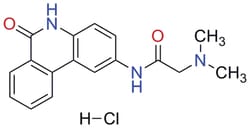
MilliporeSigma™ Calbiochem™ InSolution™ PARP Inhibitor VIII, PJ34
The InSolution™ PARP Inhibitor VIII, PJ34 controls the biological activity of PARP. This small molecule/inhibitor is primarily used for Cell Structure applications.
MilliporeSigma™ Calbiochem™ TrkB Antagonist, ANA-12
A cell-permeable thiophene carboxymide derived compound that acts as a direct and selective antagonist of TrkB receptor

MilliporeSigma™ Calbiochem™ Alendronate, Sodium Salt
An amino-bisphosphonate that acts as a potent inhibitor of bone resorption and cartilage destruction.
MilliporeSigma™ Calbiochem™ Histone Lysine Demethylase Inhibitor VIII, GSK-J4
Histone Lysine Demethylase Inhibitor VIII, GSK-J4, CAS 1373423-53-0, is converted to GSK-J1 intracellularly for effective JMJD3 and UTX inhibition (∽ 25 to 50μM in HeLa cultures).
MilliporeSigma™ Calbiochem™ MMP Inhibitor I
The MMP Inhibitor I controls the biological activity of MMP. This small molecule/inhibitor is primarily used for Protease Inhibitors applications.